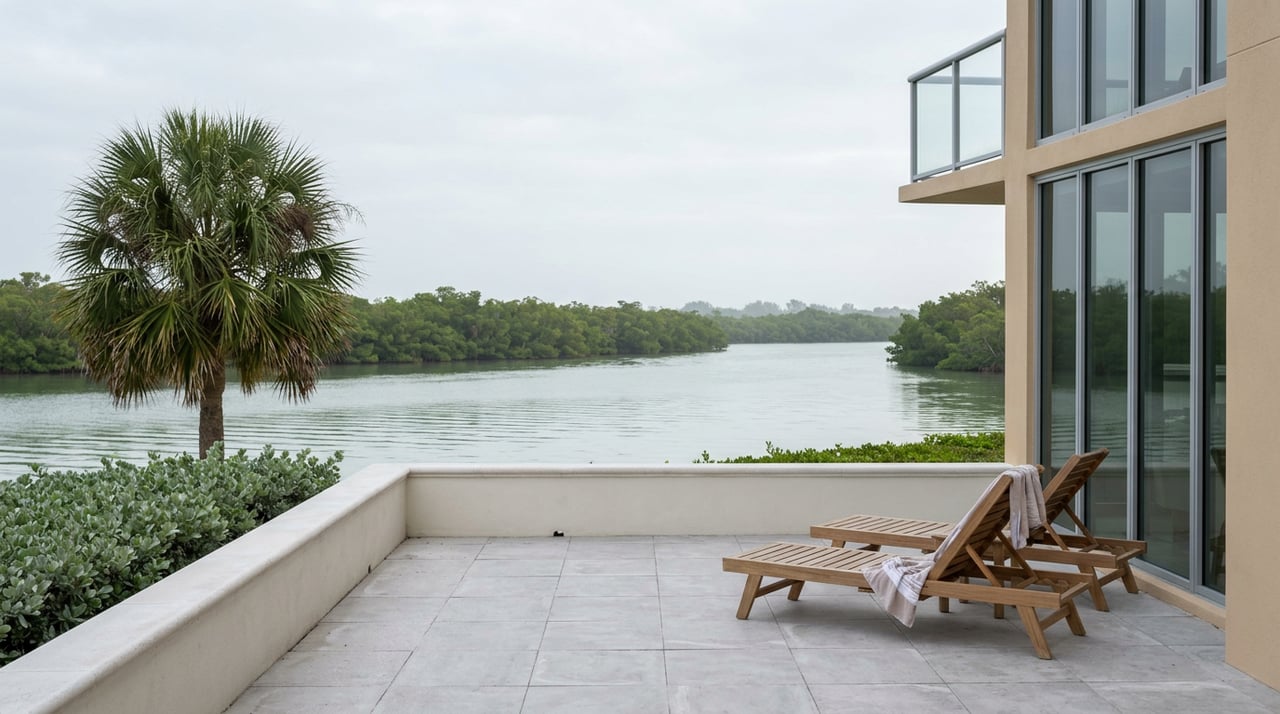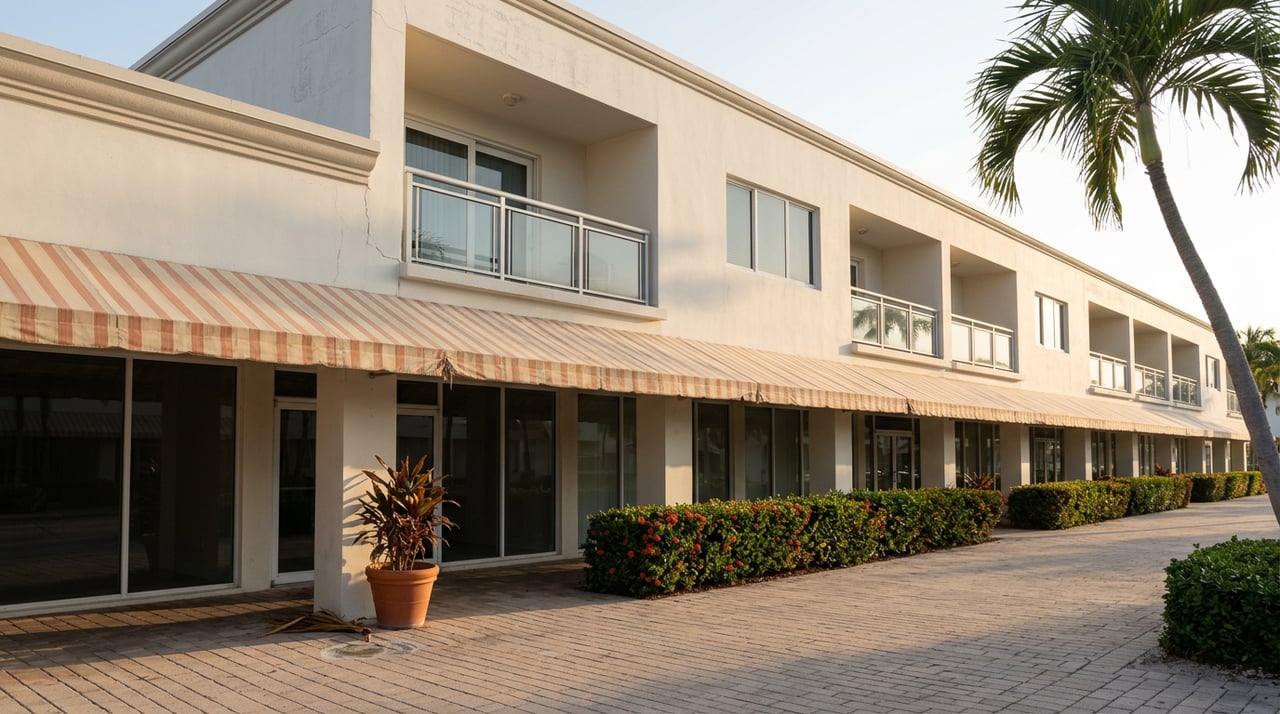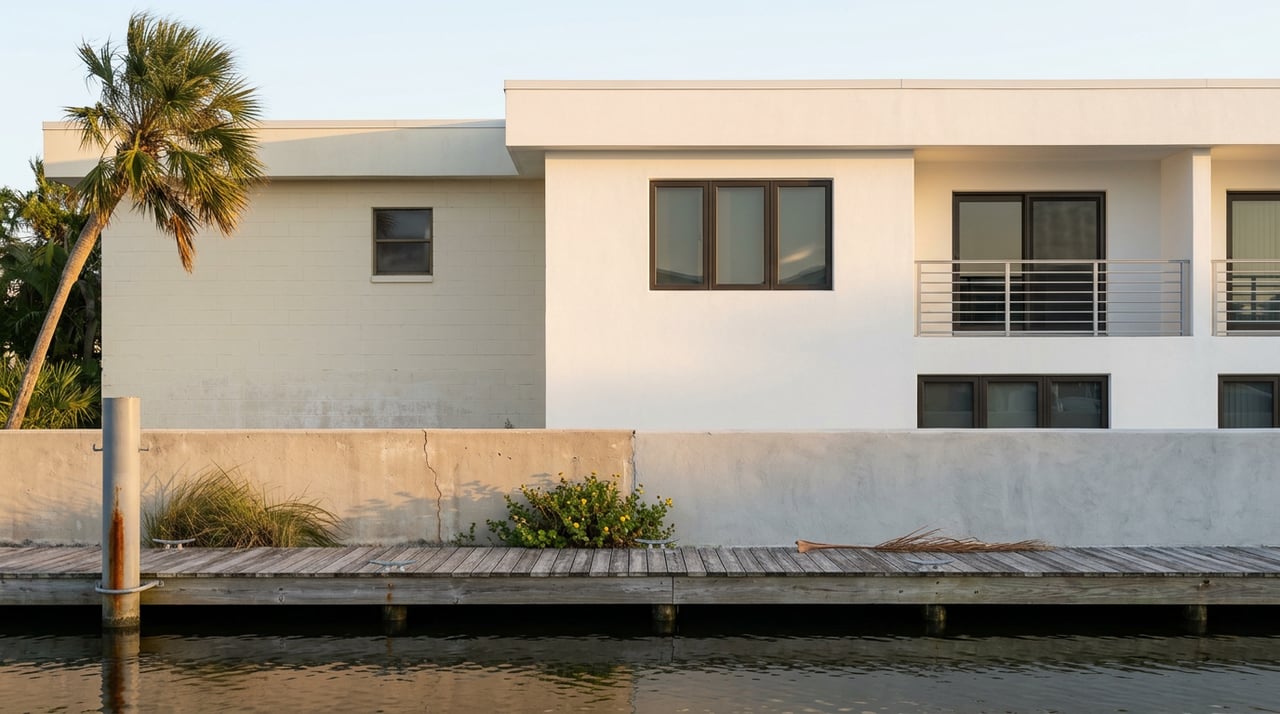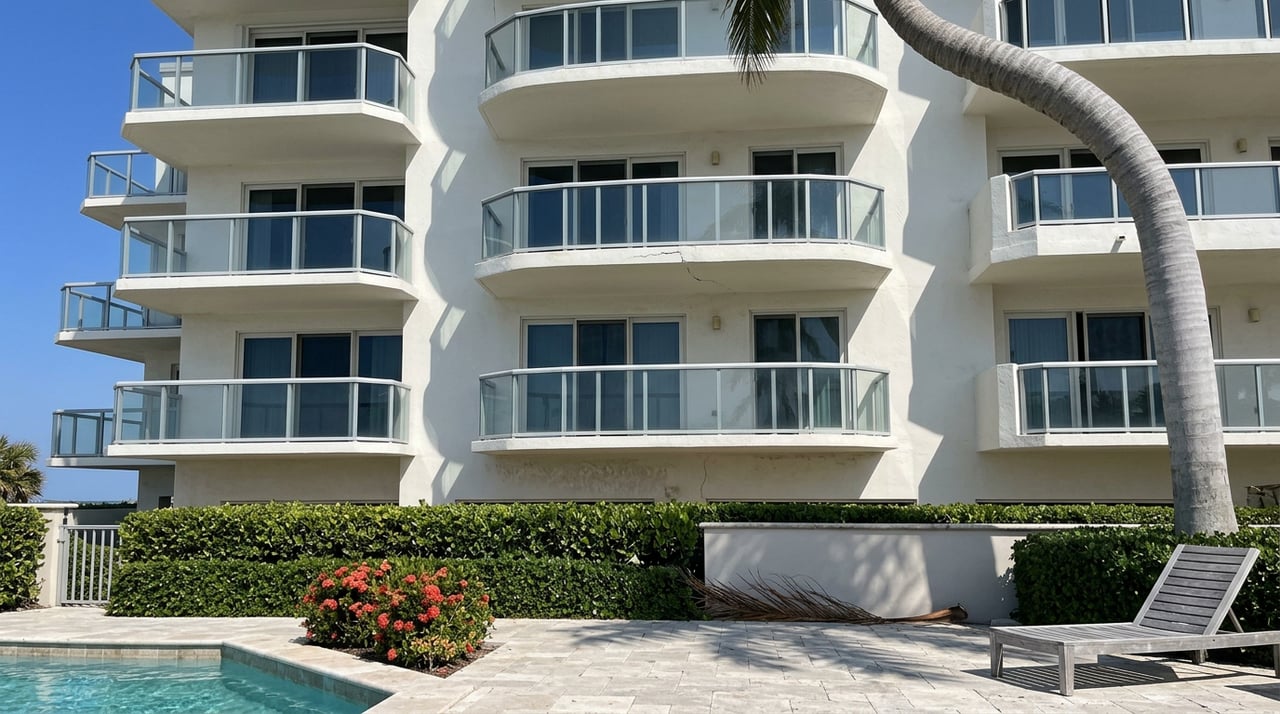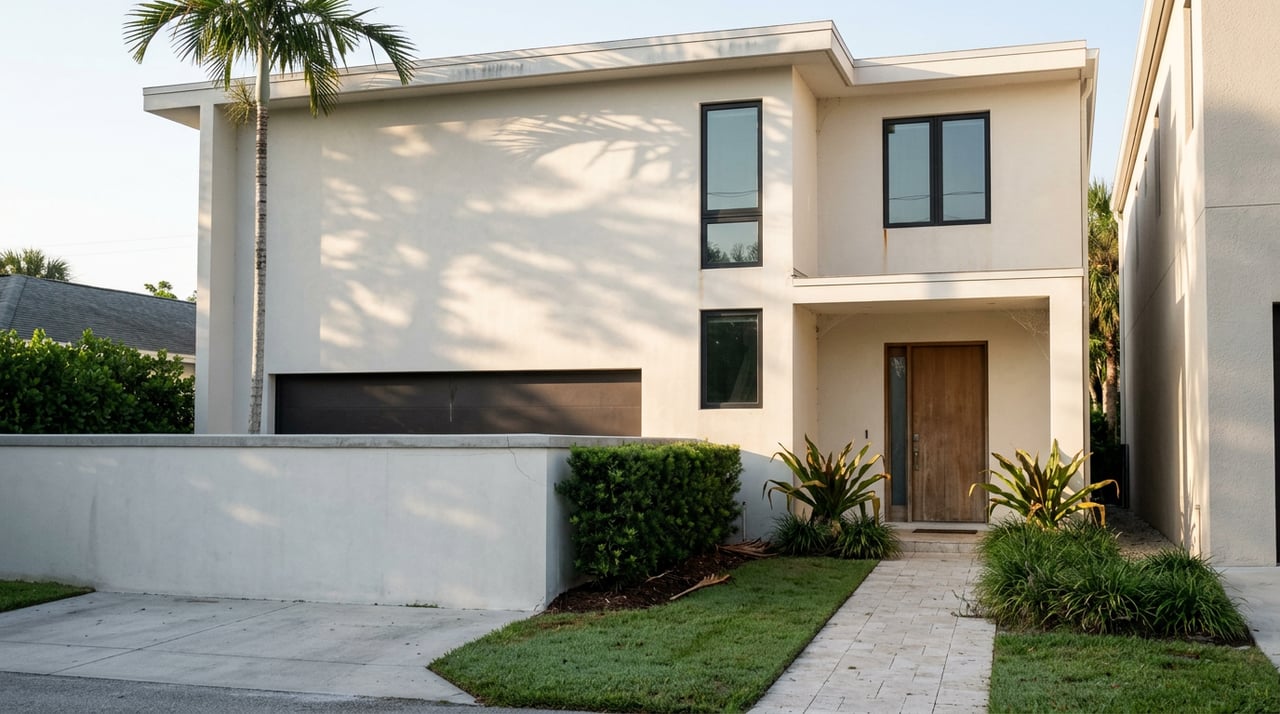
Walk two blocks in Palm Beach Shores this year and you can find both sides of a puzzle standing across the street from each other. One house is a low, sun-bleached two-bedroom on its original 1960s footprint, unchanged except for a new roof at some point in the last decade. The other sits on a nearly identical lot, freshly rebuilt from the slab up, sharper lines, impact glass, a construction date measured in months rather than decades. Same block, similar lot size, and if you ran the numbers on price per square foot, wildly different answers.
That gap is not a fluke on this peninsula right now. It is close to the defining feature of the market.
If you have searched a portal for Palm Beach Shores, you have probably seen the median sale price and assumed it told you the whole story. It doesn't. Over the three months ending in May 2026, that median moved a modest amount. Over the same window, the price attached to every square foot moved dramatically more. Those two figures are supposed to travel together. A market that is simply getting hotter should push both up at roughly the same pace. In Palm Beach Shores, they haven't moved together at all, and the reason why matters more than either number on its own.
The Numbers That Don't Match
Here is what the same three-month window actually shows, comparing this year to the same period a year earlier:
| Metric (3 months ending May 2026) | Palm Beach Shores | Change from a year earlier |
|---|---|---|
| Median sale price | $1.4 million | up 7.6% |
| Median price per square foot | $757 | up 40.4% |
| Median days on market | 32 | down from 73 |
| Homes sold | 13 | up from 10 |
A 7.6 percent gain in median price is a solid year. A 40.4 percent gain in price per square foot in that same stretch is not solid, it's strange, and strange numbers are worth stopping on rather than repeating as proof of a hot market. If demand alone were driving this, buyers paying more for the same kind of house would push both figures up together. Instead, something is changing about what is actually selling each month, not just what buyers are willing to pay for it.
Reason One: Thirteen Sales Is Not a Stable Number
Palm Beach Shores is a small town by transaction count. Thirteen closings in a month, up from ten a year earlier, is genuinely thin. In a market that size, one unusually large teardown lot closing, or one very compact new-build selling for a premium, can swing the median and the per-square-foot figure independently, sometimes in opposite directions, without any broad shift in what buyers across the town are paying.
You can see that instability in the data itself. One national listings aggregator's own Palm Beach Shores page, pulled in July 2026, quoted a $1,587,000 median for the town's overall market, a $945,000 average sale price, and a $502,500 median for single-family homes specifically, all in the same dataset. Those are not typos. They are three different center points depending on which slice of a very small inventory pool you use. In a town where a handful of sales define the month, the headline median tells you which properties happened to close, not where the market as a whole is heading.
Reason Two: The Housing Stock Is Being Replaced, Not Just Bid Up
Underneath the sample-size noise sits a real and durable pattern. Palm Beach Shores has an active teardown and rebuild cycle on its original platted lots. Modest mid-century cottages and ranch homes are coming down, and new custom construction is going up in their place, often on the same footprint. Listings this year have credited a local builder, NRH Homes, with several of these newly completed houses on the peninsula, positioned close to the beach and the Intracoastal on lots that predate almost everything else on the block.
New construction on an established lot typically comes in at a different size than the older home it replaces, sometimes smaller once you account for how many additions and enclosed porches an original owner tacked on over sixty years. But it sells for a price that reflects current construction, current wind and flood standards, and none of the deferred maintenance the old house was quietly carrying. When a newer, tighter-built house sells for close to what a larger, older one recently fetched, the price per square foot jumps even though the total sale price barely moves. That is the mechanism sitting underneath the 40 percent figure, and it has nothing to do with the town suddenly becoming more desirable overnight.
The same force is showing up in condos. 123 Ocean, a six-story, 27-residence oceanfront building from Lionbright Development with architecture by Arquitectonica, prices its residences from roughly $1.6 million up past $5.6 million for its largest units. One penthouse there, a three-bedroom at 2,428 square feet, was listed at $5.607 million in late 2025, which works out to a little more than $2,300 per square foot, nearly three times the town's blended median. Layer even one or two of those closings into a thirteen-sale month alongside a few older houses, and the median price per square foot moves in a way that the median sale price never will.
A Third Force Riding Along: What Buyers Are Paying to Avoid
For condo buyers specifically, part of what separates a newer building's price tag from an older one isn't cosmetic. Florida's Structural Integrity Reserve Study law, tightened by House Bill 913 in 2025, requires condominium and cooperative buildings three habitable stories or taller to complete a study covering eight structural components and to fully fund reserves against it, with no more owner votes to waive that funding once a budget qualifies under the new rules. Under the Florida Division of Condominiums' own guidance, existing owner-controlled associations were required to have that initial study on file by the end of 2025, and full funding is now the operating rule for 2026 budgets.
A brand-new building has no deferred structural obligation to catch up on. An older Palm Beach Shores condo association might, and that liability shows up as higher monthly dues or a special assessment down the road, not as a line item on the listing sheet. Some of what a buyer pays for at a newer address is genuinely new finishes and better views. Some of it is the peace of mind that comes from a building with no structural reserve gap to close.
What to Actually Check Before You Compare
The town median and the per-square-foot figure are both real numbers, and both are close to useless for judging a specific listing on their own. Before you use either one to size up a Palm Beach Shores property against something in a neighboring town, it's worth asking:
- What year was this specific structure built or substantially rebuilt, not just what year the lot was platted.
- How does the lot size compare to the structure on it. On a barrier island peninsula, land value doesn't move at the same pace as construction quality, and a small new house on a full-size lot is a different asset than a large old house on the same footprint.
- For any condo, has the association actually completed its Structural Integrity Reserve Study and started funding it, or is that still pending. The estoppel package and recent board minutes will tell you, the listing sheet won't.
- How many other sales that month back up the number you're looking at. A median built from thirteen closings deserves more scrutiny than one built from a hundred.
None of this means Palm Beach Shores got more expensive or less expensive this year in any simple sense. It means the town's housing stock is in the middle of turning over, older homes for newer ones, established condo buildings for boutique new product, and the price-per-square-foot figure is picking up that turnover before the median catches up to reflect it.
If you're weighing a Palm Beach Shores property against something on Singer Island or elsewhere along this stretch of coast, the comps that matter aren't the ones a portal serves up automatically. They're the ones matched for lot size, construction age, and building financial health, block by block. That's the kind of digging Dawn Sacco does before putting a number in front of a client, not after.
A Few Questions Worth Asking Directly
Does a higher price per square foot always mean a neighborhood got more expensive? Not on its own. It can also mean the mix of what sold changed, smaller new construction replacing larger older homes, or a boutique condo closing alongside a handful of long-held houses. Palm Beach Shores this year is a clear example of the second story.
How do I find out if a Palm Beach Shores condo building has completed its required structural reserve study? Ask for the association's most recent Structural Integrity Reserve Study and current reserve funding schedule as part of the standard document request during a purchase. Florida's Division of Condominiums also maintains reporting requirements associations must meet, which your agent or closing attorney can help you confirm.
Is a teardown-and-rebuild lot a good investment in Palm Beach Shores? It depends entirely on the lot, the builder, and what's actually being replaced. A newer custom home on an established lot can carry real value, but the price reflects the construction and the land together, not a simple multiple of the town's square footage average.
Ready to look at an actual comp instead of a portal average? Let's Connect.