By August, the loggerheads have mostly finished laying. The stakes and pink survey tape you have been walking past since May are no longer waiting for something to happen. They are counting down. On Singer Island, this is the shift most residents miss until their second or third summer here: the beach in August is not a nesting beach anymore. It is a hatching beach, and the etiquette that goes with that inverts almost everything the June signage was asking of you.
The distinction matters because nesting and hatching are different problems with different fixes. A nesting female is large, deliberate, and comes ashore for a few hours at a time. A hatchling is the size of a bottle cap, moves in a burst, and has one instinct to work with. What confuses her mother by moonrise can be lethal to two hundred of her offspring at 2 a.m.
What the calendar actually looks like here
Southeast Florida's sea turtle season runs March through October, with peak nesting activity between May and July. Singer Island sits inside one of the densest sea turtle nesting regions in the state, with loggerheads and greens the most common visitors. The nests laid on our sand in late May and June are the ones emerging now.
The math is straightforward. Females deposit 80 to 120 eggs, which incubate about two months buried in the sand, after which hatchlings crawl down the beach to the water. A nest laid Memorial Day weekend is due right about now. A nest laid the Fourth of July will emerge around Labor Day. State biologists confirm the broader window: in the southeastern USA, hatchlings emerge throughout the months of June, July, August, September, and October.
Two practical consequences follow from that timeline:
- The pink tape you see in August is protecting eggs that are close to hatching, not eggs that were just laid. A nest disturbed in week three of incubation is a bad day. A nest disturbed in week eight can be a lost clutch.
- The hatchling window is nocturnal and unpredictable. Hatchlings ready to emerge wait just beneath the sand surface until conditions become cool, a temperature cue that prompts them to emerge primarily at night, although some late-afternoon and early-morning emergences have been documented. There is no schedule to consult. The nest goes when the nest goes.
Why your building's lighting policy is doing more work than you think
The Sea Turtle Conservation League of Singer Island has spent years working with beachfront properties on the one variable residents actually control: light. The reason is not sentimental. It is optical.
Hatchlings do not know where the ocean is. They infer it. When loggerhead hatchlings emerge from the shell, they are attracted to the blue and green wavelengths of light naturally reflected off the ocean through celestial light, and they use this natural light cue to navigate from the nest toward the ocean. On a dark barrier island in 1950, the brightest horizon was east. On a barrier island lined with mid-rise condominiums in 2026, it often is not.
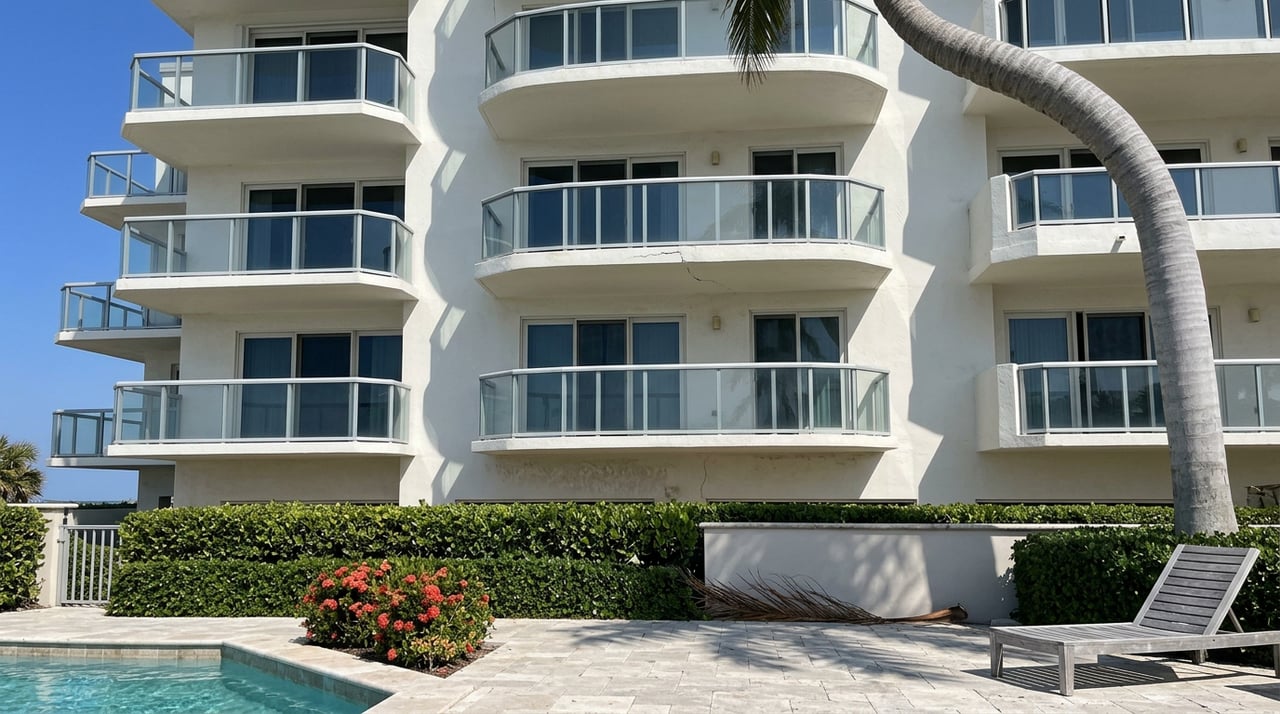
The failure mode is specific. To a hatchling on a beach, an artificial light source appears bright because it is relatively close by, yet it is not intense enough to brighten the sky and landscape, and the resulting glare makes the direction of the artificial source appear overwhelmingly bright, so much brighter than the other directions that hatchlings will ignore other visual cues and move toward the artificial light no matter where it is relative to the sea. A single unshielded balcony bulb on the fourth floor, seen from ground level a hundred feet away, can pull an entire brood inland toward A1A.
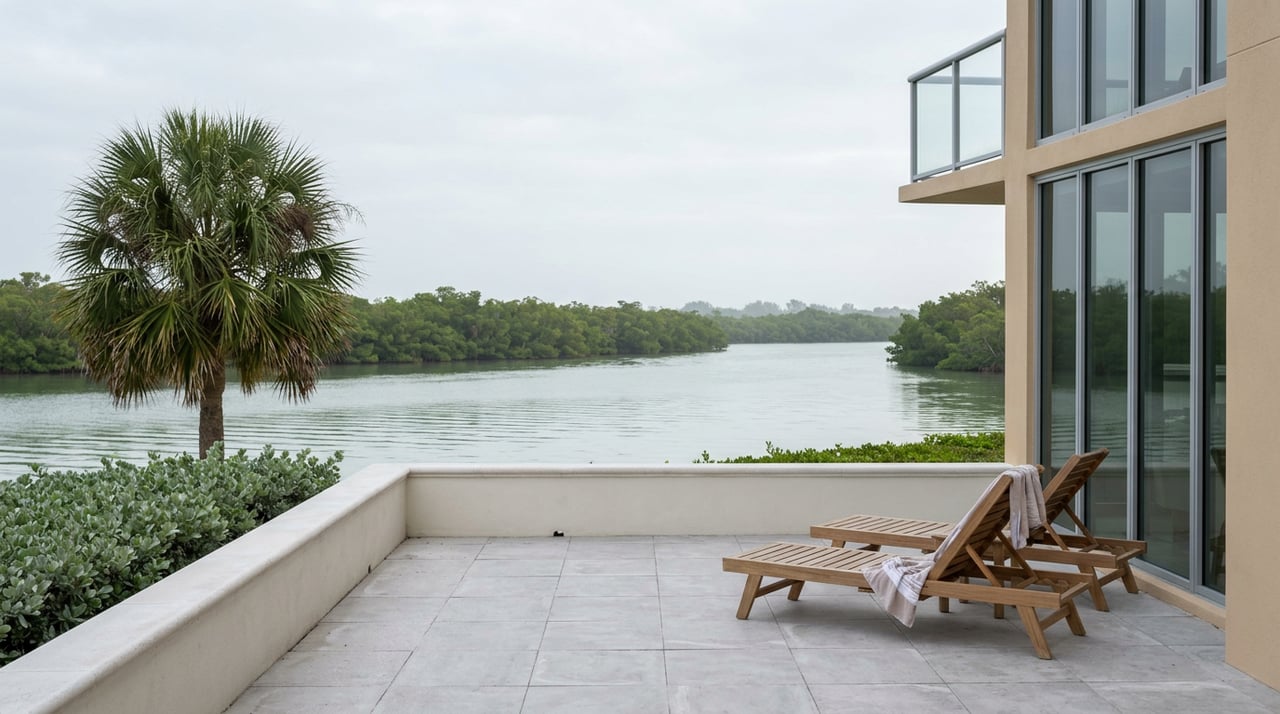
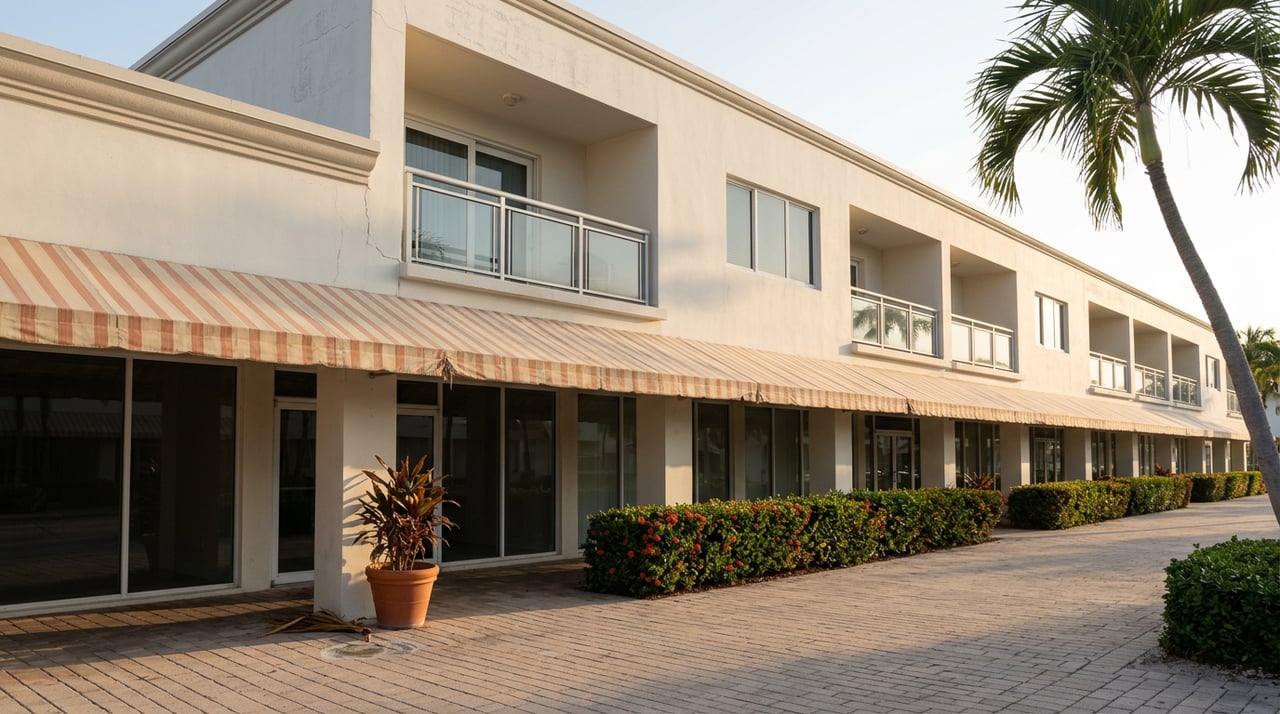
This is why local condo associations and hotels participate in turtle-friendly lighting programs, switching to amber or red lights that don't disorient hatchlings, a community-wide effort that has kept nesting numbers strong even as development has increased. If you own on the ocean side of a Singer Island building and you have never asked your association what its August lighting protocol is, August is the month to ask. The questions worth putting to the manager:
- Are exterior fixtures visible from the sand fitted with long-wavelength amber LEDs, and when were they last checked?
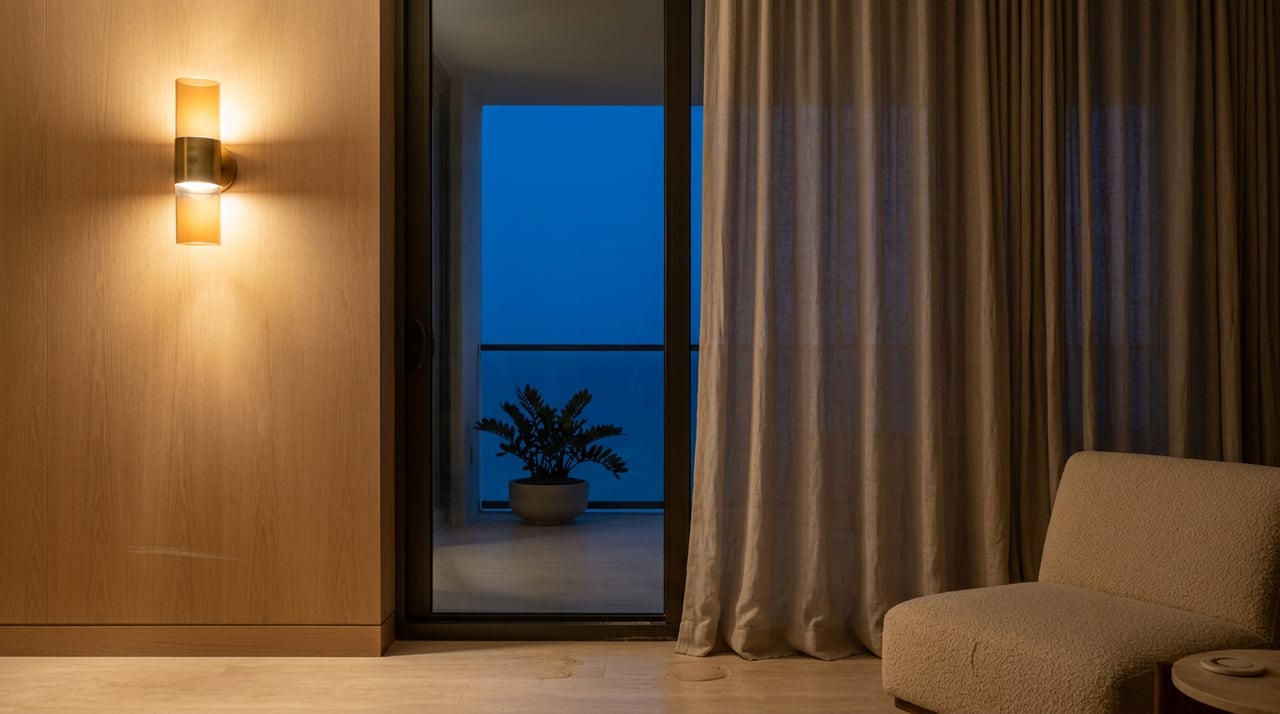
- Does the building's rule ask owners to close blackout drapes on ocean-facing units after dusk between May 1 and October 31?
- Are pool deck and stairwell lights on timers or motion sensors, and are they shielded from the beach line of sight?
None of this is exotic. It is the standard the island has been converging on for a decade. But policies drift, bulbs get replaced with whatever the maintenance closet has on hand, and a resort-friendly ambient glow that reads as luxury in a listing photo reads as a wrong turn to a hatchling.
The morning walk is the one to keep
August's best time on the beach is still the same time it has always been: sunrise. The difference is what you are looking at. Fresh crawl tracks show up overnight, and they are not subtle. Early morning beachcombers often spot fresh crawl marks leading up from the tide line as evidence that a turtle nested overnight, and these tracks are distinctive, wide and symmetrical, with flipper marks on either side. Hatchling tracks are the miniature version, a fanned-out braid of dozens of small parallel lines leading seaward from a shallow crater.
Walk north from the Ocean Reef Park access at dawn and you will almost certainly cross one. Volunteers with the Sea Turtle Conservation League and, further north, monitors coordinating with Loggerhead Marinelife Center in Juno Beach walk the same stretches at first light to document new activity. Give a wide berth to any nest marked with stakes and tape. If you find scattered tiny tracks that end inland, at a parking lot or a pool cage or a stairwell, that is a disorientation event and it is worth a phone call.
If you find a stranded, injured, or disoriented hatchling, the number to have in your phone is the Florida Fish and Wildlife Conservation Commission's wildlife line at 1-888-404-FWCC. FAU's sea turtle researchers are explicit about the rest: do not touch or help the hatchling, it is against state and federal law to remove the hatchling from its natural environment, and turtle hatchlings all dig out of their nest, usually at night, and head directly for the sea.
Evening beach walks are the harder habit to adjust. If you keep the routine in August, leave the phone in a pocket. White flashlight beams, camera flashes, and even screen glow at ground level are the same category of problem as a badly placed floodlight. Red-filtered lights are the accepted workaround for anyone who has to be on the sand after dark.
Where to actually see it, on their terms
The window for guided turtle walks that let visitors observe a nesting female in person is mostly behind us for the year. Those programs, run in June and July, are how the state parks let the public see the front end of the cycle. John D. MacArthur Beach State Park on Singer Island is one of the recognized hosts on this coast.
What MacArthur, the only state park in Palm Beach County, still offers in August is the ecosystem context most Singer Island residents drive past for years without stopping to absorb. The park's nature center runs regularly scheduled programs, including a series of naturalist-led sessions in the amphitheater, and the boardwalk over Lake Worth Cove is a legitimately good place to spend forty minutes on a hot afternoon without touching sand. Friends of MacArthur Beach, the park's citizen support organization, publishes its calendar at macarthurbeach.org and hosts the MacBeach Gala: Mangroves in the Moonlight on November 12, 2026 for residents who want a way to underwrite the science that produces the pink tape in the first place.
For the hatching end of the cycle, Loggerhead Marinelife Center in Juno Beach is fifteen minutes up A1A and runs sunrise nest excavations and public hatchling releases through the fall. It is where a lot of Singer Island parents and grandparents end up on a Saturday morning in September, watching post-hatch inventories that explain what has been happening on our own beach the night before.
The thesis, said plainly
If you moved to Singer Island for the beach, June is the postcard month and July is the tourist month. August is the month the beach is doing the work it exists to do. The nests are quiet. The parents are gone. What happens in the next six or seven weeks decides whether this section of Florida coastline continues to be, in ecological terms, what a real estate brochure calls "one of the best beaches in the country."
Almost nothing that determines the outcome is dramatic. It is a swapped bulb on a lanai. A closed drape at 9 p.m. A flashlight left in the drawer. A dawn walk taken twenty feet farther from the dune line than felt necessary. The residents who have been here long enough know this, which is why the island's lighting culture has held up as well as it has. If you are newer to a Singer Island address, August is a good month to inherit the habits.
If you are weighing an oceanfront purchase and want to understand how a specific building handles lighting compliance, association reserves for exterior fixture upgrades, and the practical rhythm of living on a nesting beach across a full year, Singer Island Real Estate is glad to walk the property with you and put the right questions to the manager before you sign. Let's Connect.